by Neil Norman
MEN dancing like women. It’s easy, right?
Tights, wigs, tutus, a bit of lippy, false eyelashes and off they prance.
Drag artistes pout and pose and wave their arms in the air like they just don’t care. Nothing to it.
Think again.
The members of Les Ballets Trockadero de Monte Carlo aren’t just blokes prancing around in female attire. They are ballerinas as well as danseurs.
And that’s the pointe.
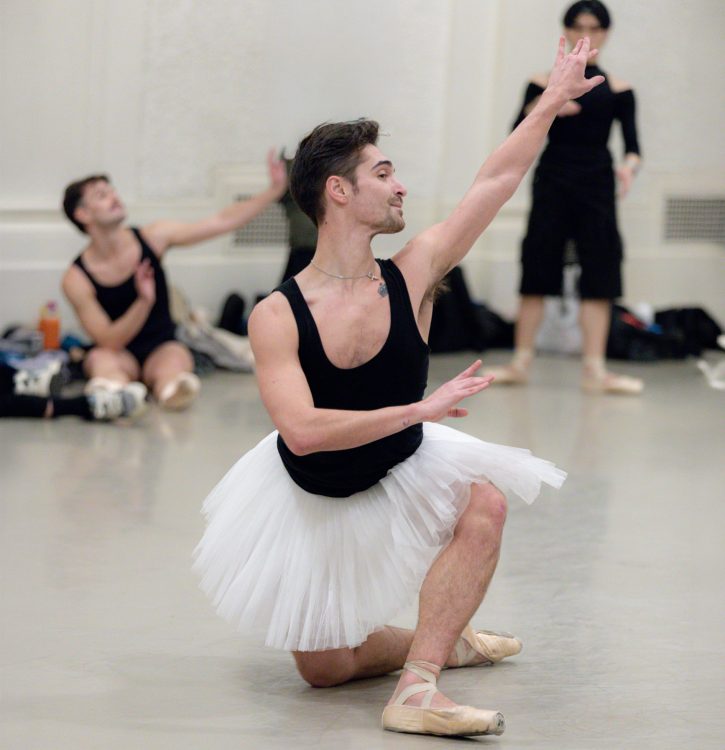
Photo by Chris Gagliardi
Let us cast our minds back to Manhattan in 1974. A loft. A group of men – some drag artistes, some dancers – had the bright idea to put the two artistic disciplines together. Drag Ballet? Wouldn’t that be fun?
Formerly members of the Trockadero Gloxinia Ballet Company, they initially produced small, late-night shows in Off Off Broadway venues. The troupe’s first show was on September 9, 1974 in a second-storey loft on 14th Street in the Meatpacking District. Reviewed favourably by distinguished New Yorker magazine dance critic Arlene Croce, the company was outed to a wider audience.
By mid-1975, the Trocks – as they were affectionately dubbed – qualified for the National Endowment for the Arts Touring Program and hired a full-time teacher and ballet mistress, formally establishing them as a touring dance company.
According to their mission statement, Les Ballets Trockadero de Monte Carlo is a company of professional male dancers performing the full range of ballet and modern dance repertoire, including classical and original works in faithful renditions of the manners and conceits of those dance styles. The comedy is achieved by incorporating and exaggerating the foibles, accidents, and underlying incongruities of serious dance.
It was open to all-comers. The only criteria were that you had to be able to dance like a ballerina and you had to be a man.
50-plus years on, the criteria remain essentially the same.
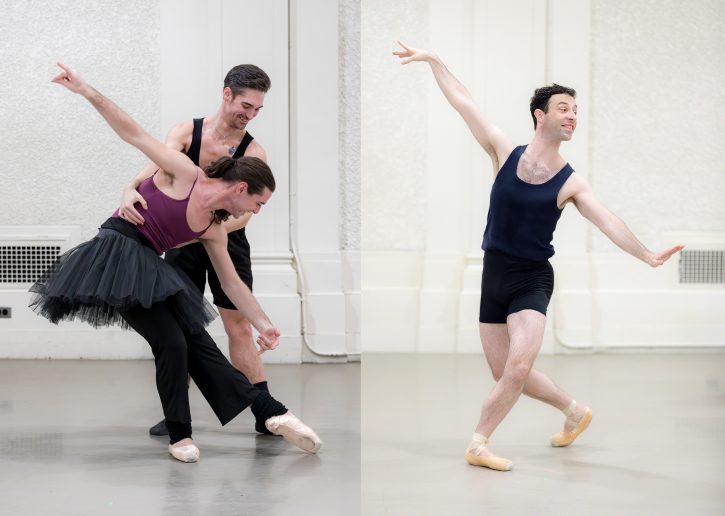
And there’s more. Most members of The Trocks have two on-stage characters – one of each gender. Having danced through the pirouettes, jetés and demi-pliés as a Princess Aurora with a hangover, the same dancer may return later as the Nutcracker Prince on a bender. This can be especially funny when a diminutive Prince has to hoist a six-foot Princess into the air.
A Trocks’ show is a cocktail of parody and pastiche of Russian Imperial ballet. The intro sets the scene and the mood. A thick Russian voice comes over the tannoy to notify the audience of changes of cast due to accident, illness or emergency. Listen carefully for who hasn’t made the show this evening.
Photos by Chris Gagliardi
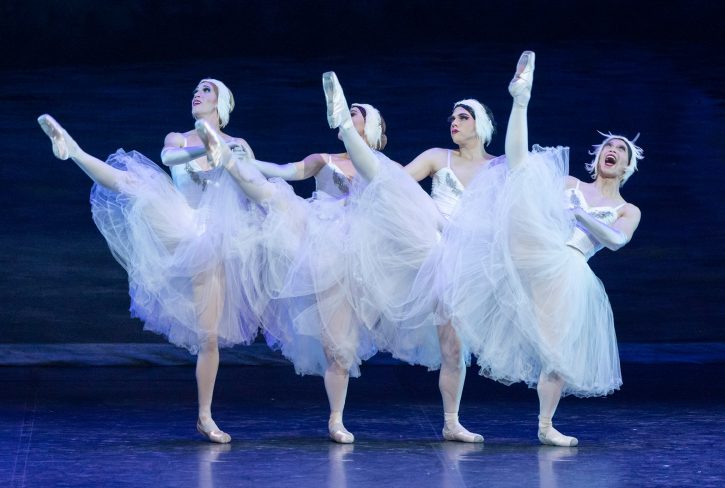
The humour is generated largely through the dancers’ stage personalities, character idiosyncrasies and inflated egos. Internecine jealousies are played out in performance. The celebrated Dance of the Cygnets from Swan Lake is rapturously and rupturously funny, with three dancers performing in perfect synchronisation complete with nodding heads while the fourth inattentive swanlet at the end keeps missing cues and is distracted by the audience or someone in the wings.
In ensemble sequences they compete for attention, pushing and pulling and colliding with each other as they attempt to hog the spotlight. And so it goes, each sequence funny until it isn’t. Having established that they are remarkable physical clowns they will suddenly perform a piece that is not amusing in the least; a serious bout of dancing that stops you in your tracks and turns your head around. It is this that elevates The Trocks from a comedy troupe to a higher level, more artists than artistes; highly-skilled professionals with a subversive sense of humour.
It is blindingly evident that The Trocks love classical ballet. They wouldn’t be able to create such perfect parodies if they didn’t. As most classical romantic ballets are not over-burdened with comedy, The Trocks are performing a service by inserting giggles and guffaws into the more po-faced elements of the classical repertoire. Whether you are a balletomane or a neophyte, there is something to entertain everyone. It has been pointed out that they can act as a gateway to ballet for children and the uninitiated.
Photos by Chris Gagliardi
Founded in New York in 1974 by ballet enthusiasts Peter Anastos, Anthony Bassae, and Natch Taylor, Les Ballets Trockadero de Monte Carlo was created to present a playful, entertaining view of traditional, classical ballet in parody form and with men performing all of the roles – and in the case of roles usually danced by women: en travesti and en pointe.
In spite of their origins and niche appeal – suitable primarily for the gay community and adventurous adults at the time – they have expanded their demographic in age, gender and sexual orientation and risen to international popularity. The adjustments have not necessarily been made by the company – whose raison d’etre remains solid – but by the audiences themselves. Society has changed to accommodate The Trocks rather than the other way around. Now, everyone from 8 to 80 can enjoy their singular brand of entertainment. They are truly inclusive.
And few countries have embraced them more warmly than Britain. The Trocks won our hearts, including that of King Charles III, formerly known as Prince, who saw them at the Royal Variety Performance in 2008. This comes as no surprise as cross-gendering in the theatre has been embedded in British culture for centuries.
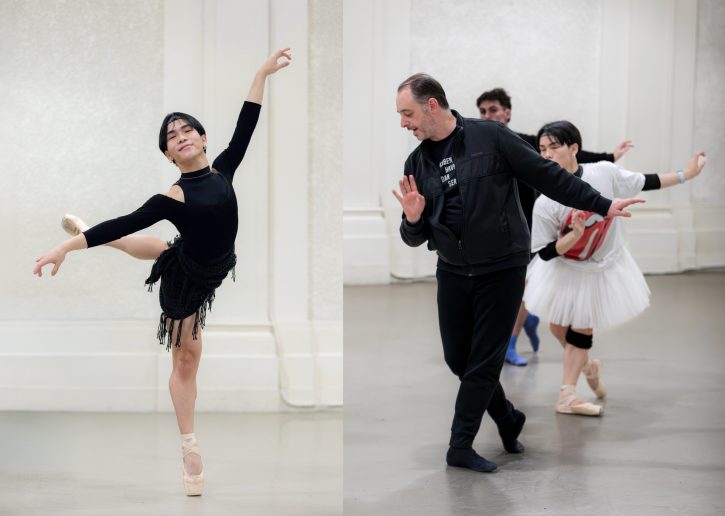
Photos by Chris Gagliardi
Women were not permitted to act on-stage in Britain until 1660 when Margaret Hughes stepped onto the stage as Desdemona in Othello. Before that momentous event, all of Shakespeare’s female characters had been played by men. From Dan Leno to Sir Ian McKellen, pantomime dames are always played by men in drag. Even now, male actors regularly challenge female actors as well as each other with handbags at dawn to play Lady Bracknell in The Importance of Being Earnest. Similarly, drag artistes such as Danny LaRue, Barry Humphries’ Dame Edna, Divine and the lissome ‘ladies’ of Soho’s celebrated Madame Jojos have each gained a place in the hearts of Brits. The stage version of Harvey Fierstein’s Kinky Boots is now a fixture in London’s West End as well as a touring show.
Consequently, The Trocks are part of a tradition that is not just continuing but evolving with each decade. If the original concept of Les Ballets Trockadero de Monte Carlo has not changed it has subtly adapted to the socio-cultural conditions of the age. What was once outrageous is now family-friendly. It is a company of professional male dancers performing the full range of ballet and modern dance repertoire, including classical and original works in faithful renditions of the manners and conceits of those dance styles.
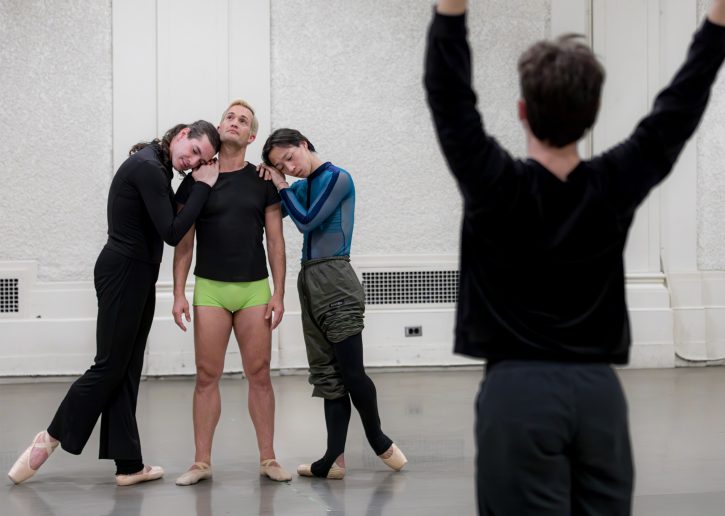
Photo by Chris Gagliardi
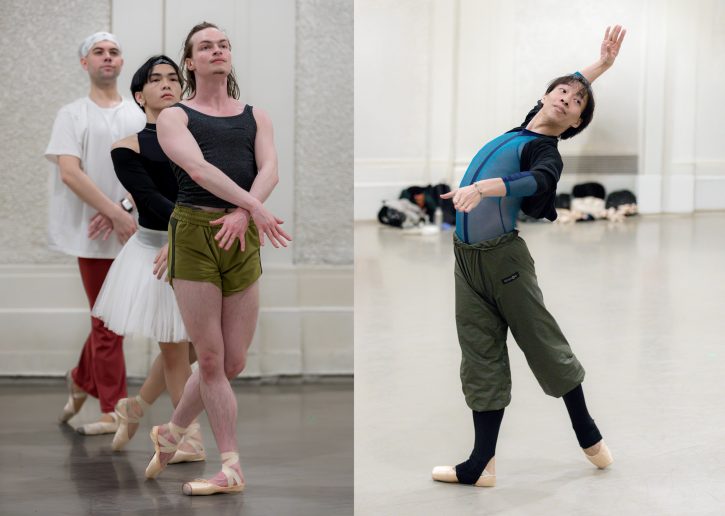
It takes real skill and a deep love of the dance form to parody it successfully and this is where The Trocks score over rivals and pretenders to the throne. Over the decades, their reputation in the dance community has grown to the point where they are highly respected. While the notion that they were once a repository for dancers who failed to gain a place in a prestigious ‘straight’ company has never been true, I can quite imagine that many dancers in serious companies envy The Trocks’ freedom of expression as well as their finely honed skills. The respect and reputation they have earned in the dance community is such that I feel certain that professional dancers actively pursue auditions with The Trocks in order to further their careers and expand their technical skills. Training to dance is one thing; training to dance as both danseur and ballerina is another. But training to dance as both danseur and ballerina AND be funny is several steps beyond the norm. In some respects, members of The Trocks have to train three times harder than most dancers.
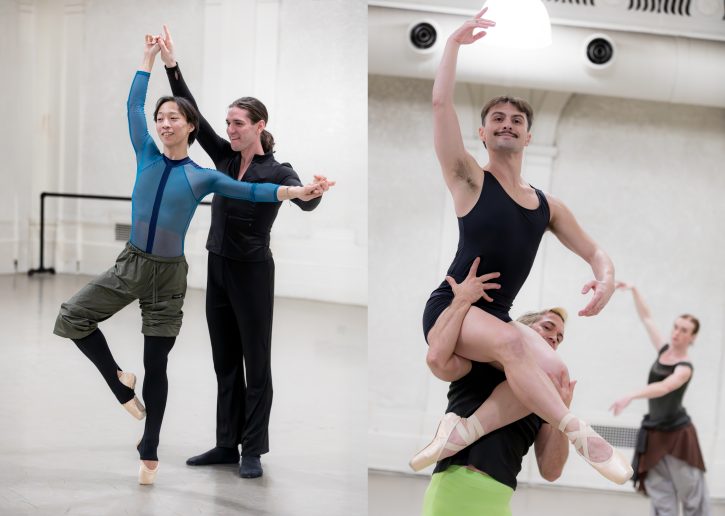
Photos by Chris Gagliardi
And they are open to all comers. You don’t have to be slim and lithe to consider a position. Men of all shapes and sizes, colours and sexual orientation can audition. The combination of respect for the technical demands of ballet and irreverence for the more po-faced conventions that accompany it is what makes them unique. But the dance comes first, the gags come later. There are dancers here so finely-tuned they could smuggle themselves into the ensemble onstage at the Royal Ballet without being noticed.
So keep your eyes open. The next time you see one of the big beasts of classical ballet pay particular attention to the ensemble. Among the Swans of Swan Lake and The Wilis of Giselle it is entirely possible that you may light upon a graduate of The School of Trock.
Neil Norman started out as a rock and film critic for the NME, before becoming the film critic for The Face magazine and has written for every newspaper from the Guardian to The Sunday Times. He was film critic for The Evening Standard and currently divides his time between writing about theatre and dance and contributing to film programmes on Sky Arts. He has written a play about Montgomery Clift, a critical biography of Robbie Coltrane, the book of Nicolas Roeg’s film Insignificance, and a novel, Cat City.
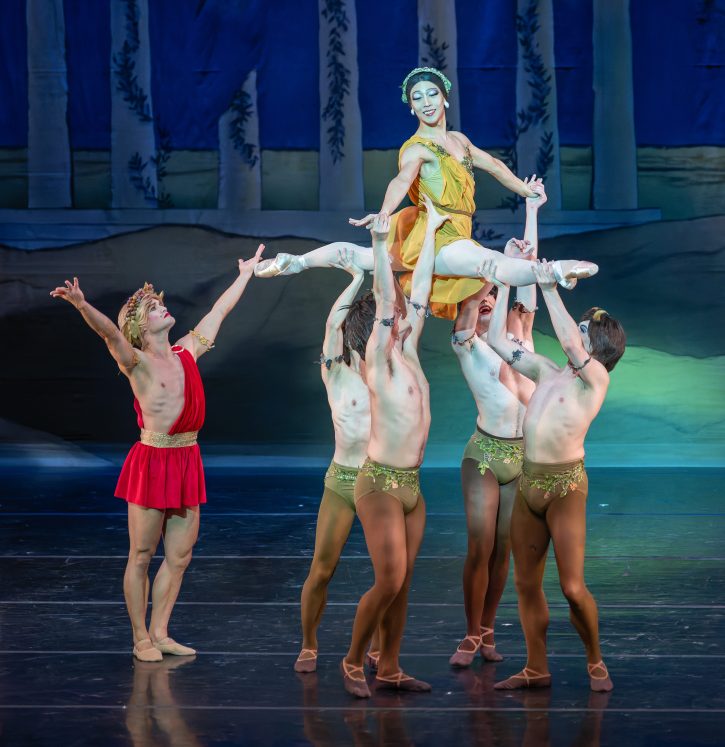
Photo by Jim Coleman